Connecting Communities Through Deaf Culture Awareness
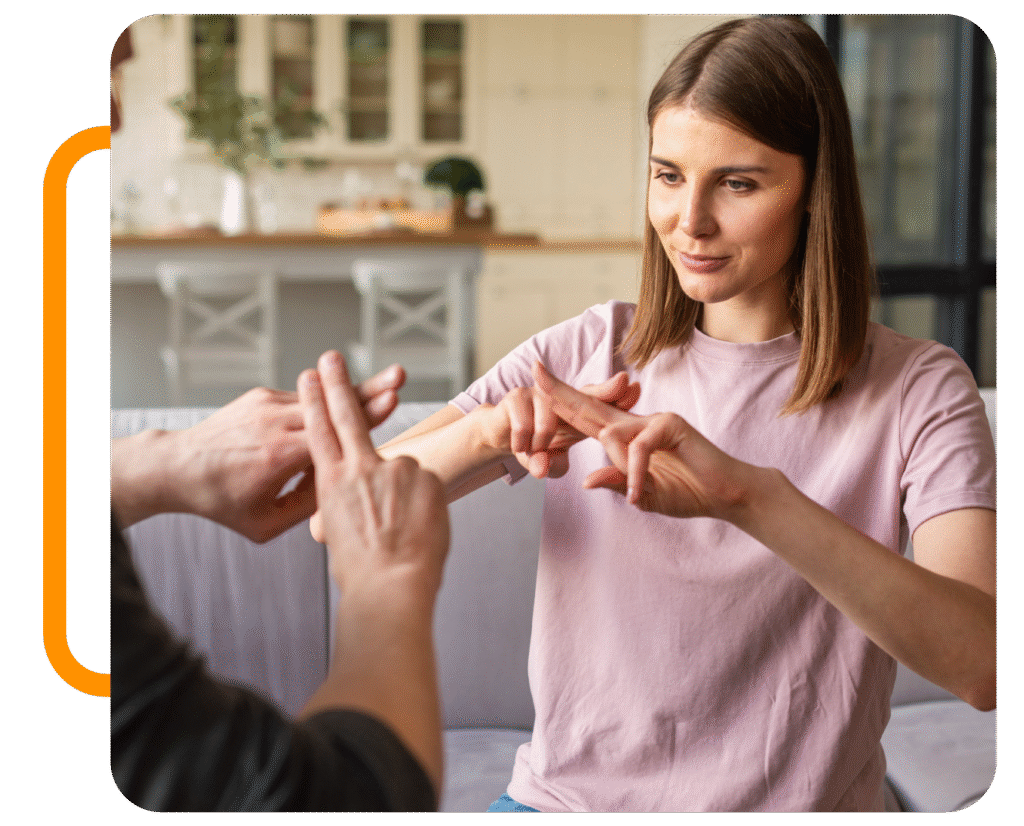
You’re in a brightly-lit, open-space community center. There are areas where Deaf people share their hobbies, interests, talents, skills, and knowledge with Deaf and hearing audiences.There are spaces for performances, collaborative art projects, classes, and exhibitions.
There are spaces where Deaf people can both access and provide skilled services in their language. The collective efforts of this organization have created a city-community where Deaf needs are met, and where hearing people appreciate Deaf language and culture.
About SignBridge
This organization connects Deaf and hearing communities through:
Combating Language Deprivation: Providing sign language instruction to Deaf children and their families, provided by fluent Deaf sign-language users (with support from trained educators when needed), thereby reducing language deprivation.
Workshops and classes: Providing a platform through which Deaf adults will be paid to share their skills and interests with Deaf and hearing audiences/learners by leading workshops, teaching classes, and representing the Deaf community in local festivals and other events.
Consulting Services: Providing Deaf consulting services for businesses who would like to learn how to be more accommodating to their Deaf employees, customers, clients, and/or patrons, making the community vastly more Deaf-friendly.
Deaf perspectives and Deaf needs are prioritized within the objectives of the organization. If you are interested in getting involved, please fill out the form here. Please also share the link to other people who might be interested.
Goal 1:
Promote Accessibility of Sign Language and Combat Language Deprivation
Goal 3:
Ensure Sustainability and Growth
Goal 2:
Foster Community Engagement and Cultural Understanding
Goal 1:
Promote Accessibility of Sign Language and Combat Language Deprivation
Goal 2:
Foster Community Engagement and Cultural Understanding
Goal 3:
Ensure Sustainability and Growth

Phase 1: Building the Foundation
- Complete incorporation and obtain 501(c)(3) status.
- Recruit and onboard board members and key staff.
- Develop and launch initial cultural workshops.
- Launch outreach efforts to increase participation and community support.
- Explore funding avenues and build financial strategy.

Phase 3: Establish partnerships with local businesses for consulting services
- Continue to evaluate program effectiveness and impact; adjust strategies as needed.
- Implement virtual programs and resources to enhance accessibility.
- Explore opportunities for growth, such as additional community partnerships.
- Set up deaf job fairs and employment opportunities.

Phase 5: Expand and Replicate in other Cities and States
Phase 2: Sustainability and Expansion
- Evaluate program effectiveness and impact; adjust strategies as needed.
- Develop and launch initial sign language classes and mentorship program.
- Launch additional educational and recreational programs.
- Collaborate with other local organizations to extend reach.
Phase 4: Community Center Development
- Continue to evaluate program effectiveness and impact; adjust strategies as needed.
- Secure funding and locate a suitable space for the community center.
- Expand programs and services to include accessible critical resources provided by and/or for Deaf individuals. May include:
- Social Work
- Addiction recovery services
- Employment Services
- Financial Services
- Legal Services
- Educational Advocacy
- Medical Advocacy
- Transportation Services
- Parenting classes
- Criminal Justice Advocacy
Phase 1: Building the Foundation
- Complete incorporation and obtain 501(c)(3) status.
- Recruit and onboard board members and key staff.
- Develop and launch initial cultural workshops.
- Launch outreach efforts to increase participation and community support.
- Explore funding avenues and build financial strategy.
Phase 2: Sustainability and Expansion
- Evaluate program effectiveness and impact; adjust strategies as needed.
- Develop and launch initial sign language classes and mentorship program.
- Launch additional educational and recreational programs.
- Collaborate with other local organizations to extend reach.
Phase 3: Establish partnerships with local businesses for consulting services
- Continue to evaluate program effectiveness and impact; adjust strategies as needed.
- Implement virtual programs and resources to enhance accessibility.
- Explore opportunities for growth, such as additional community partnerships.
- Set up deaf job fairs and employment opportunities.
Phase 4: Community Center Development
- Continue to evaluate program effectiveness and impact; adjust strategies as needed.
- Secure funding and locate a suitable space for the community center.
- Expand programs and services to include accessible critical resources provided by and/or for Deaf individuals. May include:
- Social Work
- Addiction recovery services
- Employment Services
- Financial Services
- Legal Services
- Educational Advocacy
- Medical Advocacy
- Transportation Services
- Parenting classes
- Criminal Justice Advocacy